Austria
 Belgium
 BosniaAndHerzegovina
 Bulgaria
 Croatia
 Czechia
 Estonia
 France
 Germany
 Hungary
 Ireland
 Italy
Italy
 Latvia
 Lithuania
 Luxembourg
 Netherlands
 Poland
 Portugal
 Romania
 Serbia
 Slovakia
 Slovenia
 Spain
Spain
 Swiss
Swiss
 Ukraine
 United Kingdom
 Australia
 China
China
 Georgia
 India
India
 Kazakhstan
 Singapore
 Thailand
 Turkey
 الإمارات العربيّة المتّحدة
 South Africa
 Canada
 Mexico
 USA
USA
 Brazil
 Chile
Chile

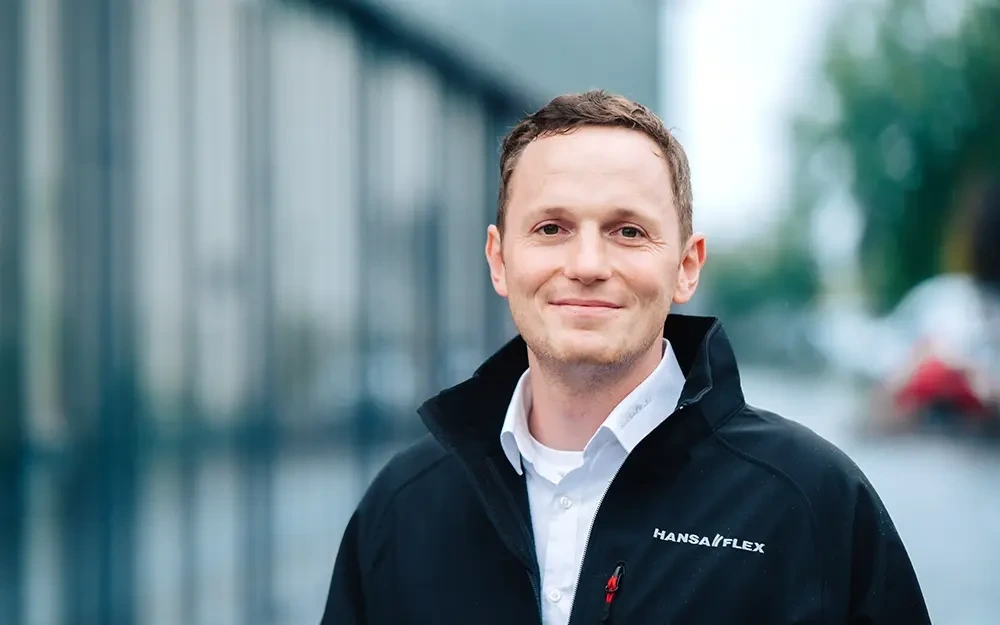
Internal audits, structured processes, international differences and continuous feedback for improvement: in the interview Felix Zimmermann explains how quality management is organised at HANSA‑FLEX and why quality arises only through the everyday work of all employees.
What does quality management mean for you?
For me as the official quality management representative, it means ensuring that HANSA‑FLEX supplies what is expected anywhere in the world. In other words, it means defining uniform standards and organising processes, people, tools and the flow of goods and information at 500 sites such that all customers experience the same quality.
How do you take into account different customer expectations?
Good quality is achieved if the expectations of the customer are fulfilled, including where requirements may differ. Just as marathon athletes have different demands of their running shoes than a recreational runner would, there are also differences between customer requirements. Quality management makes these different expectations tangible and organises the appropriate responses within our company.

How does feedback inform the processes?
In quality management, we differentiate between proactive expectation management and reactive feedback. Proactively, we clarify customer expectations using systematic requirement analyses, technical feasibility assessments and interdisciplinary discussions within the company. In this way we ensure that the requirements are fully understood and our processes can be purposefully modified and further developed.
Reactively, we receive feedback reports from customer audits, debriefings and the resolution of complaints. The estimates of customer satisfaction produced by Sales are also taken into account in our analysis. We are able to check, on a case-by-case basis or by considering systematic issues, whether some expectations had not been clearly defined or sufficiently investigated.
How are the findings shared across the company?
Our principal tool is the intranet, which we use as a knowledge database. That is where we publish company processes, standard operating procedures, templates and all the other required information.
Microsoft Teams plays an important role in the rapid exchange of knowledge and experience. I am regularly in contact with about 30 colleagues around the world in order to coordinate our quality management system across all borders. We discuss current concerns and experiences at quarterly meetings.
In some national subsidiaries, a single person is often responsible for quality management and therefore these discussions are particularly important for keeping everyone in the loop. In addition to clear standards, we also find that soft skills are key to better acceptance and easier implementation of quality management measures.
Internationally, what is firmly defined, what remains flexible?
All over the world, we work to specified standards that apply to all company sites. These include technical standards and guidelines, permissible tolerances as well as work instructions and standard operating procedures.
At the same time, we deliberately create some room to manoeuvre, for example, where cultural peculiarities, different forms of customer contact or local framework conditions have to be considered.
What measures had the most impact over the last year?
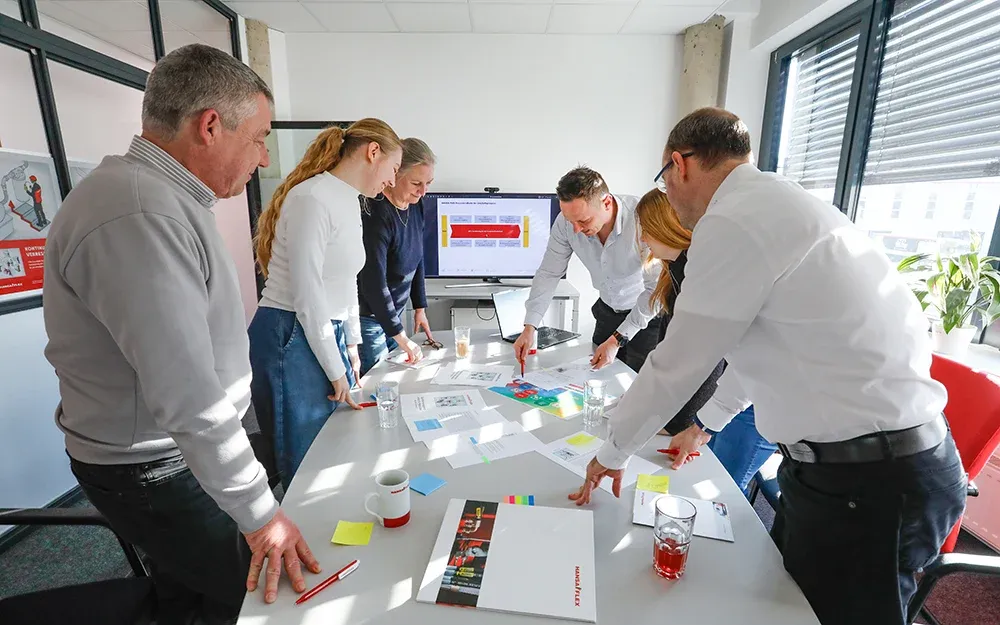
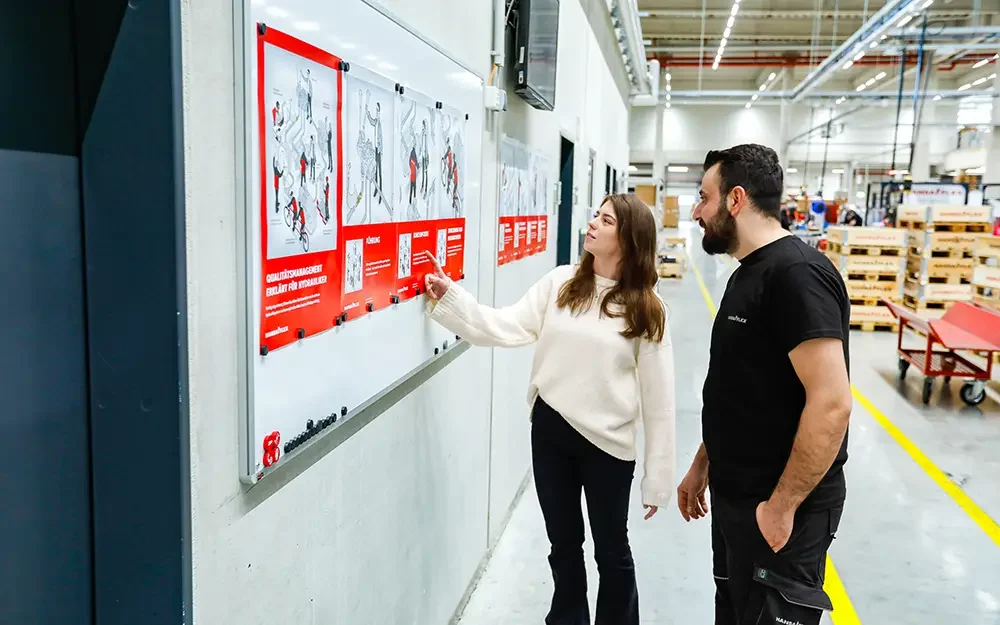
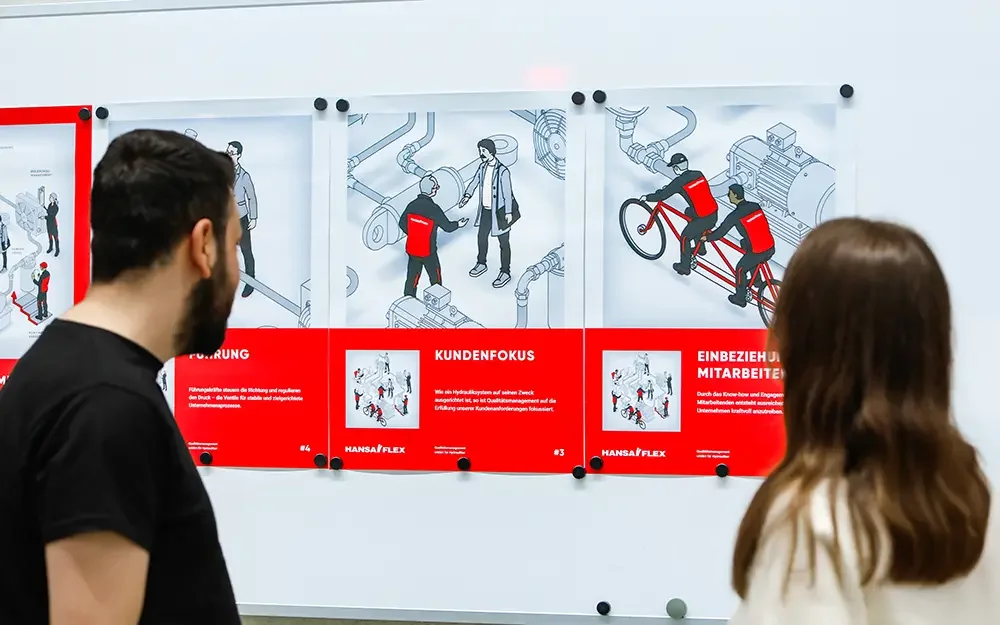
We conduct about 200 audits annually in Germany and another 150 internationally. Two years ago, we developed our own audit app to simplify the audit programme. In addition, we designed a series of posters highlighting the seven basic principles of quality management. The aim was to make quality regulations easier to understand: the language used in standards is translated into the language of the workplace in order to show their concrete benefits in everyday operations.

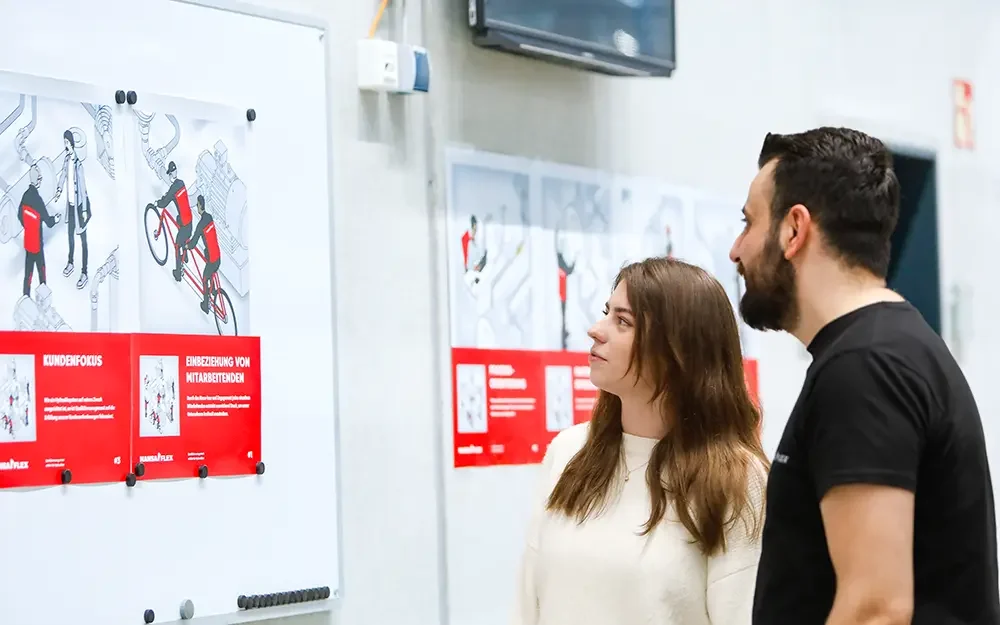

So – quality management is actually a task for the whole company?
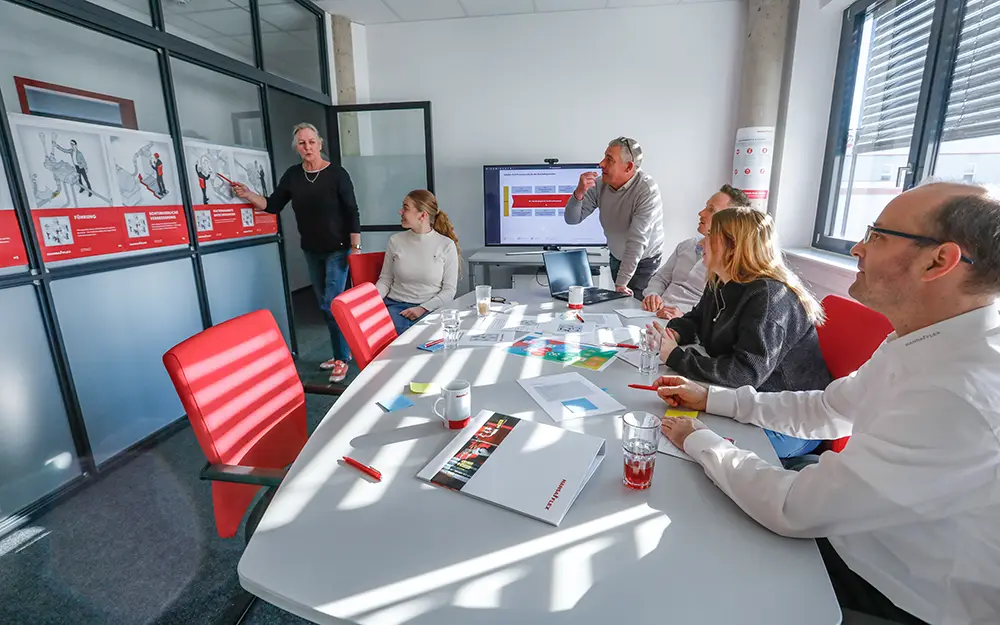
Exactly! We work continuously to counter the misunderstanding that quality is “done by the quality management representative”. We are, in fact, coordinators. We create transparency, structure requirements and determine who needs which type of support.
The responsibility for implementation lies with the managers, supervisors and the employees in each company site and area of production. Quality management systems provide the framework. However, the real effects arise exactly where they should – in everyday operations.
How do you make quality management more visible to our customers?
Through our globally valid ISO 9001 certification from TÜV NORD, which forms the foundation for our standards. In addition, we ensure we have clear, well-defined global processes and products so that customers receive a consistently high level of quality from all our company sites. Another key component is our transparency: we allow customer audits of any site at any time and provide insights into processes, responsibilities and quality indices. In this way we show that quality is not only documented but also an integral part of our activities
What is the procedure for internal and external audits?
At the start of the year, we set out which areas of work and which sites will be internally audited. The basis of an audit is a standardised and regularly updated checklist designed around our core processes.
Following the completion of an audit, the audited site receives an audit report. If non-conformities are found, a corrective action plan is drawn up and implemented. We continue to collect the results of all audits, identify weak points in our systems and introduce company-wide improvements.
In the case of customer audits, customers notify us in advance with their own quality audit checklists. These audits are often followed by constructive dialogue and discussions about future development.
Certification audits, such as those by TÜV NORD, are performed to check compliance with the standards.
For example, we were recertified in accordance with ISO 9001, ISO 14001 and ISO 45001 in 2025, and our certification was extended to include ISO 50001.
How should quality management develop in the future?
Our customers’ needs are continually developing and new regulations are forever coming into force. Quality management must accommodate these changes, keep up-to-date and integrate them into our existing processes. We adopt a very pragmatic approach to this, which in my view is one of our strengths.
The main challenge is always: despite our decentralised structure, we must maintain a high degree of standardisation and quality internationally. I would like for us to preserve the factors for success that made us strong in the past, further develop them and carry them forward into the future. If we achieve that aim, we will remain internationally successful.