
 Austria
 Belgium
 BosniaAndHerzegovina
 Bulgaria
 Croatia
 Czechia
 Estonia
 France
 Germany
 Hungary
 Ireland
 Italy
Italy
 Latvia
 Lithuania
 Luxembourg
 Netherlands
 Poland
 Portugal
 Romania
 Serbia
 Slovakia
 Slovenia
 Spain
Spain
 Swiss
Swiss
 Ukraine
 United Kingdom
 Australia
 China
China
 Georgia
 India
India
 Kazakhstan
 Singapore
 Thailand
 Turkey
 الإمارات العربيّة المتّحدة
 South Africa
 Canada
 Mexico
 USA
USA
 Brazil
 Chile
Chile
OUR CUSTOMER MAGAZINE IN
SEPTEMBER
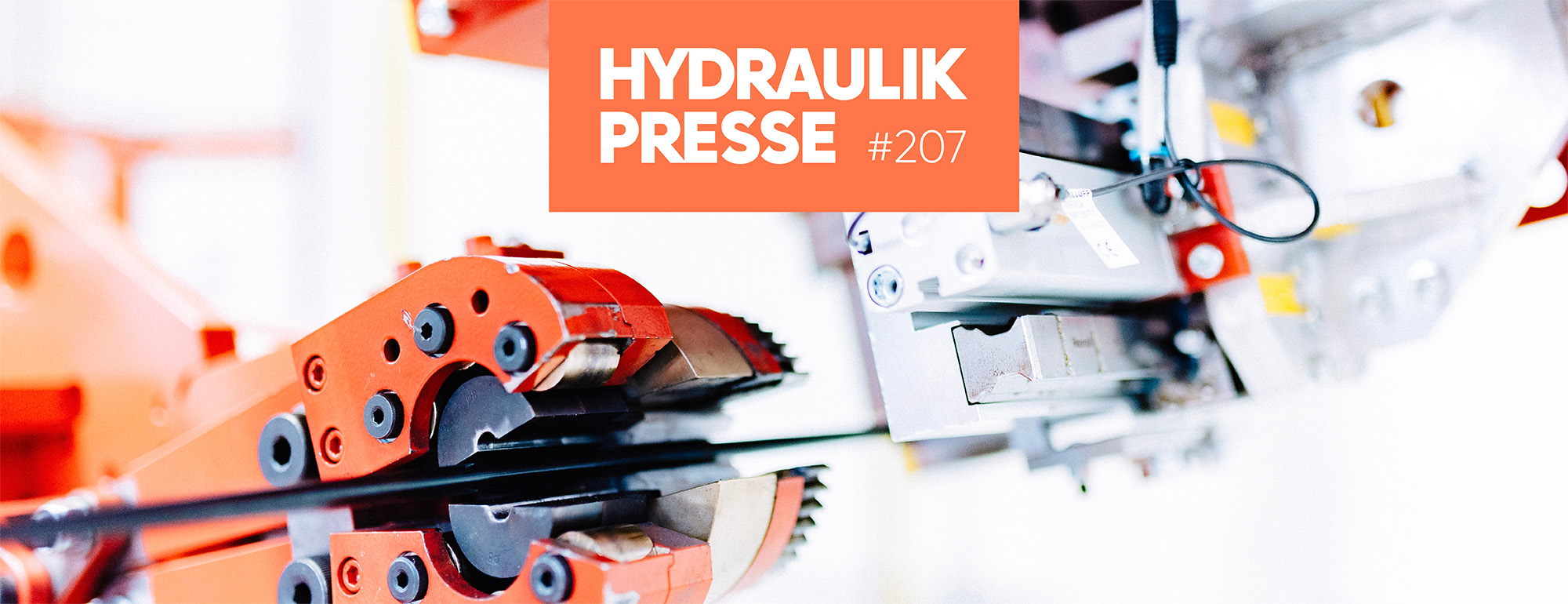
We are delighted to present issue #207 in September 2024! Can you spot what's hidden on the cover? Find out below.
![[Translate to Englisch:]](/fileadmin/hansaflex/News_and_Events/Online_Magazin/Menschen_bei_HANSA-FLEX/2024_Auf_ein_Wort_Axel_Tammen/045_AT_Mitarbeiterportrait_JA_2024_08.jpg "[Translate to Englisch:]")
Fit for the future
Axel Tammen, Head of Technology and Quality Assurance at HANSA-FLEX, on the future of hydraulics.
![[Translate to Englisch:]](/fileadmin/hansaflex/References/Baugewerbe/Terra_Infrastructure/431_terra_infrastructure_DS_2024_07.jpg "[Translate to Englisch:]")
On an equal footing right from the start
A building site surrounded by water? terra infrastructure makes it possible, while HANSA-FLEX provides the heavy-duty hydraulics required.
Technical expertise in hydraulics

Installing hydraulic hose lines in accordance with standards
Experience shows that many hydraulic hose line defects are due to installation that does not comply with the applicable standards. Here are five common installation errors that should be avoided!
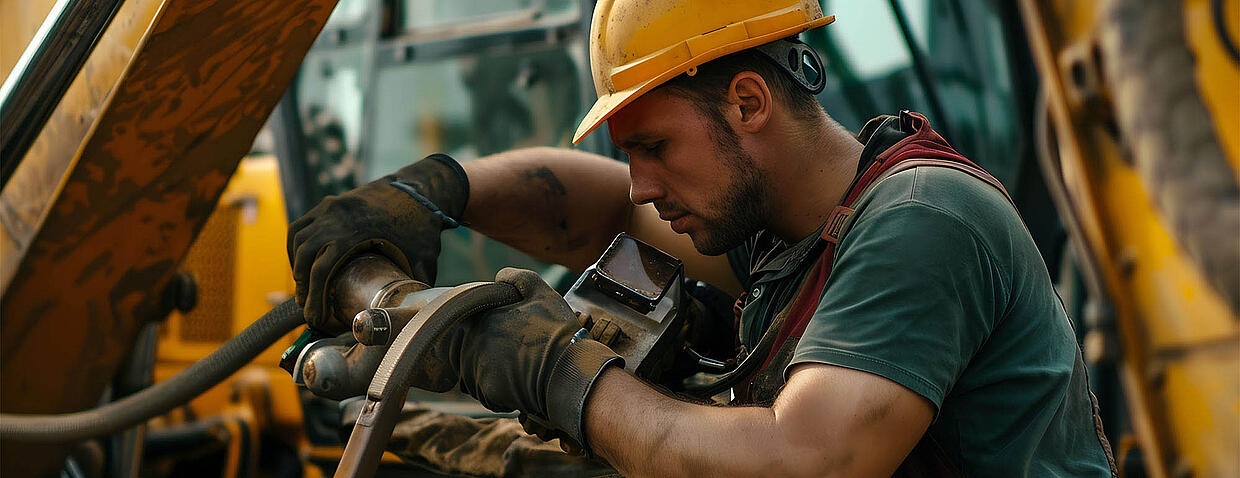
“No clue - no concern” Repairs to hydraulic hose lines...are they
People often try to seal leaks in hydraulic hose lines themselves by using clamps, insulating tape, shrink tubing, tape or even welding. This attitude is extremely dangerous.

Changes in the new standard for plastics and rubber machines
Machine safety is playing an increasingly important role in both legislation and technical standards. For this reason the previously applicable DIN EN 201 standard from the year 2010 has been fundamentally revised and replaced by DIN EN ISO 20430. This has also resulted in changes regarding the safety requirements of hose assemblies.
Have you recognised it?
The cover page of our current issue shows the robotic bending cell in the production area for pipes and special fittings. Steel pipes up to 18 x 1.5 mm can be bent in the bending cell with its 2 bending robots. The pipe sections are fed in via a chain conveyor up to 6 metres long, or via a step conveyor up to 2 metres long. The 2 robots in the bending cell can bend a pipe line synchronously (2 identical pipes at the same time), autonomously (2 different pipes at the same time) or working together.