Austria
 Belgium
 BosniaAndHerzegovina
 Bulgaria
 Croatia
 Czechia
 Estonia
 France
 Germany
 Hungary
 Ireland
 Italy
Italy
 Latvia
 Lithuania
 Luxembourg
 Netherlands
 Poland
 Portugal
 Romania
 Serbia
 Slovakia
 Slovenia
 Spain
Spain
 Swiss
Swiss
 Ukraine
 United Kingdom
 Australia
 China
China
 Georgia
 India
India
 Kazakhstan
 Singapore
 Thailand
 Turkey
 الإمارات العربيّة المتّحدة
 South Africa
 Canada
 Mexico
 USA
USA
 Brazil
 Chile
Chile
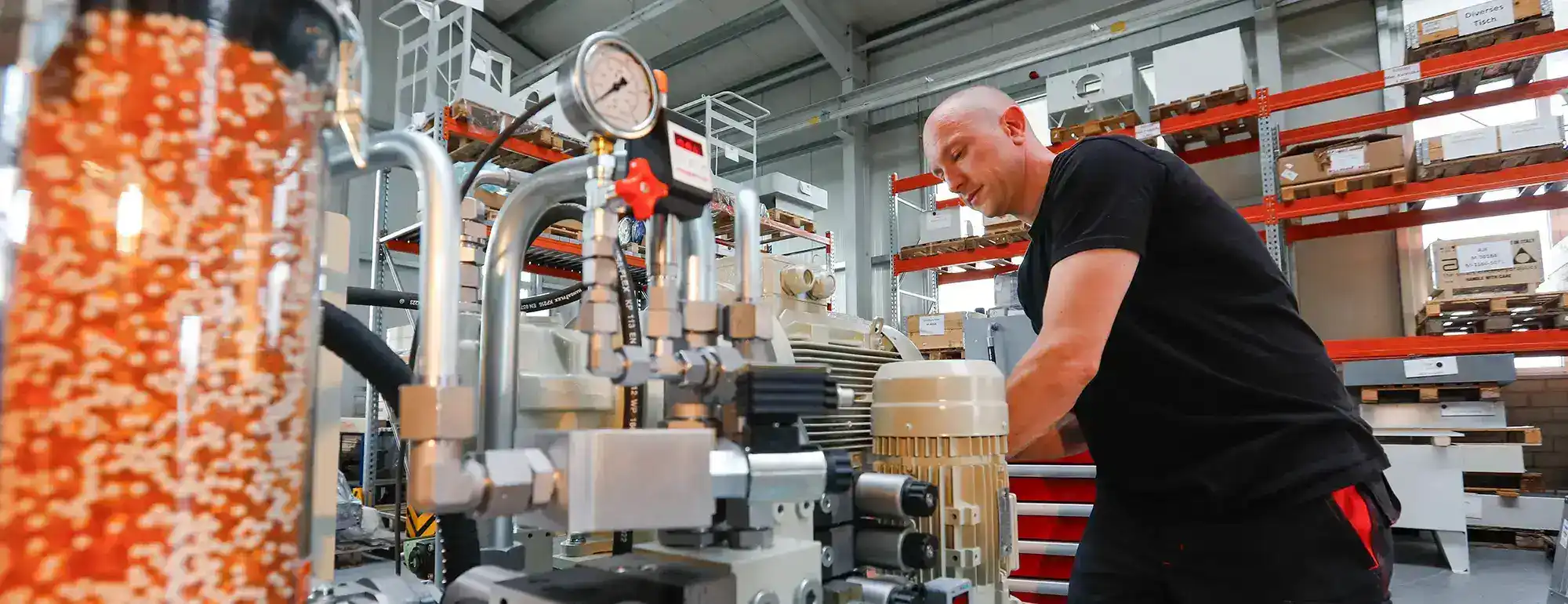
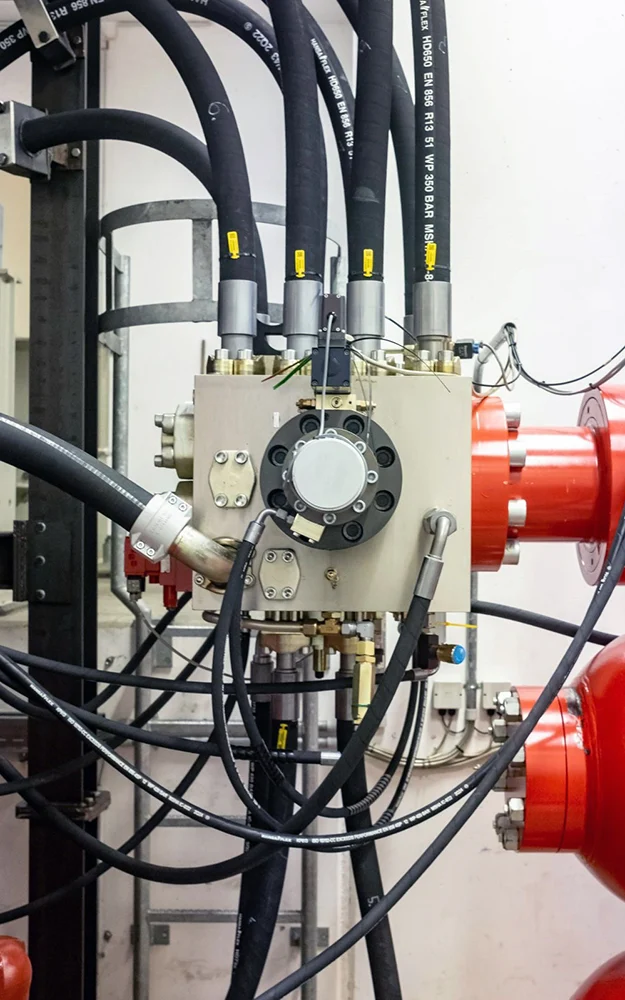
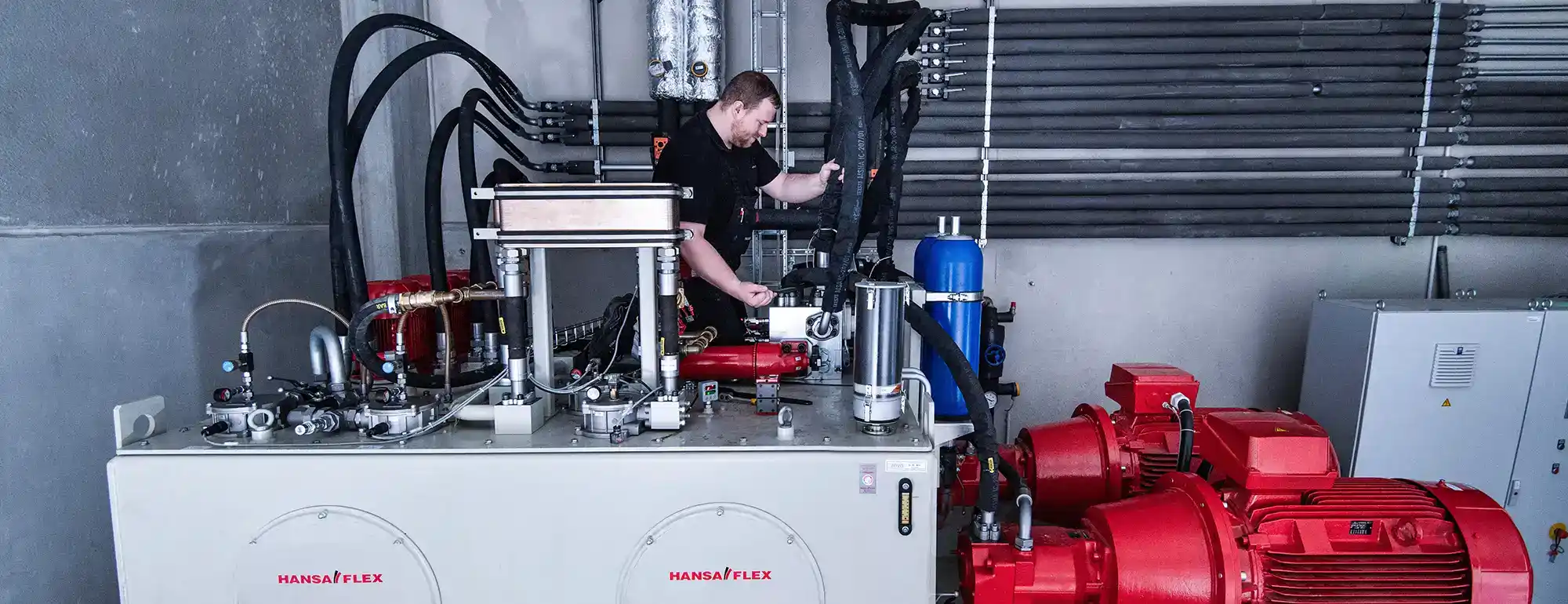
Hydraulic systems are the backbone of numerous industries and mobile applications. They transfer forces reliably, precisely, dynamically and safely – in systems where parameters such as pressure, temperature and flow velocity have been correctly designed for in advance. However, these are the very parameters that can make hydraulics into a safety-critical field of work: a failure of hydraulic components for whatever reason can result in extreme damage to machines and property or even present a risk to life and limb, not forgetting the adverse environmental effects of escaping hydraulic oil. This calls for a professional health and safety protection concept that combines technical measures, organisational rules and expert inspections – from design and installation to servicing and maintenance in operation. A concept that ensures the key technology of hydraulics is safe and reliable.
1. Legal principles and technical standards
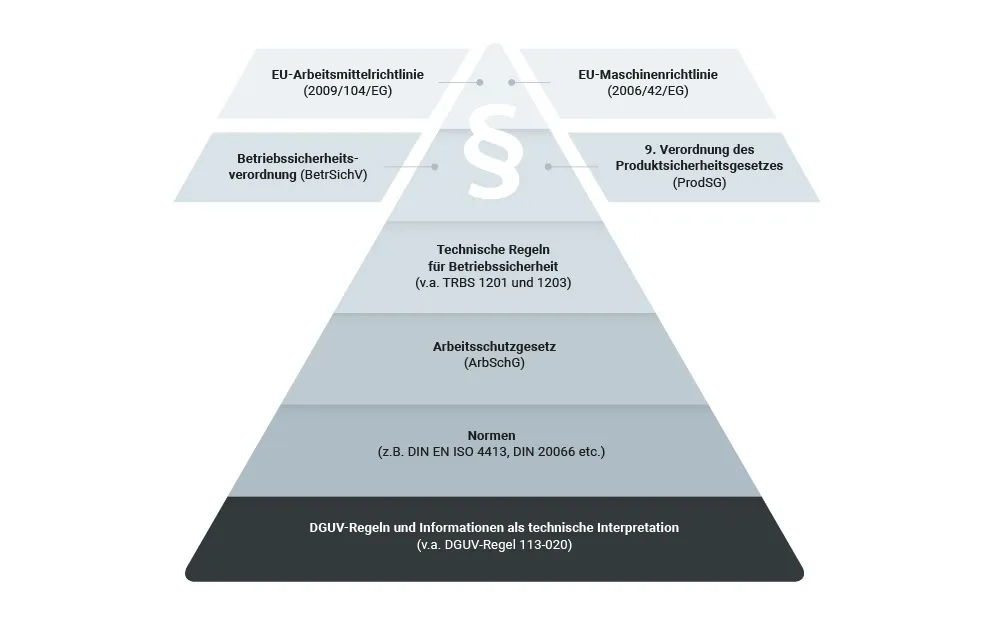
Hydraulic hose lines and associated system components are considered as work equipment in terms of the German Industrial Health and Safety Act (BetrSichV). This means the legal requirements relating to health and safety at work and product safety, as well as the relevant rules of the occupational accident insurance organisations and standards (including DIN EN ISO 4413, DIN 20066, DIN EN 853–857) and DGUV Rule 113-020 apply. The key points are:
- Risk assessment before bringing into use and at regular intervals; inspections by authorised persons with documented results.
- Mandatory labelling of every hydraulic hose line (manufacturer, date of manufacture, permissible operating pressure), the prohibition of repairs and the banning of previously used hydraulic hose material (bulk hose) in new hose line fittings.
- Protection against hose line whiplash, jets of escaping hydraulic fluid and fire risk by means of suitable hose restraint devices, protective hoses or shielding – depending on pressure, temperature and operator proximity.
These principles form the framework for all further measures in design, construction, operation and maintenance.
2. Typical risks and symptoms
2.1 Elevated fluid temperatures and oil ageing
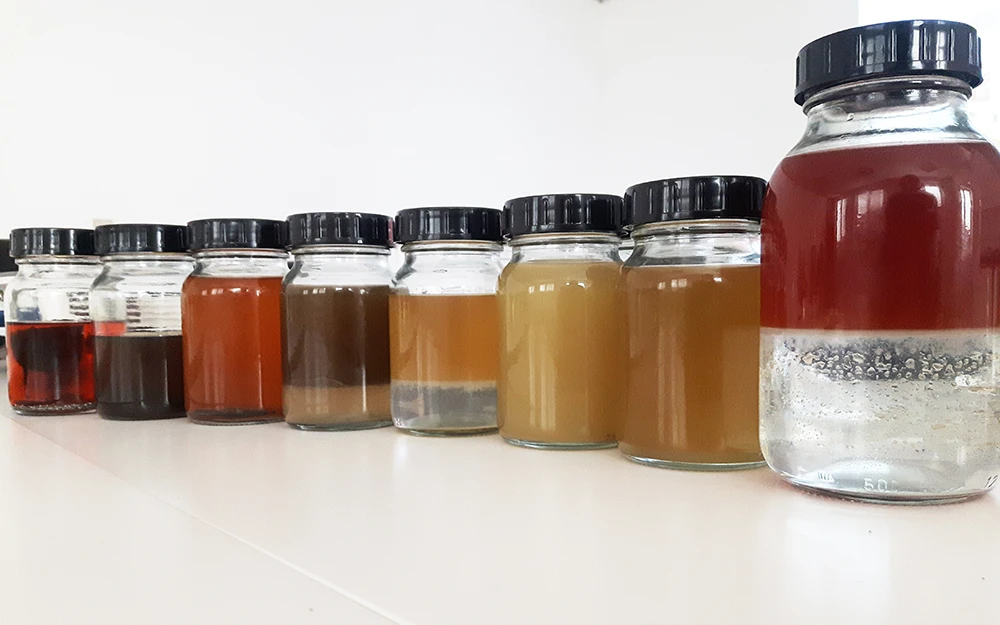
A common early warning signal of hydraulic system problems is elevated oil temperatures. Visible indicators: dark colouration and an unusual odour of the fluid. Temperatures above 60 °C should be avoided with mineral oil-based hydraulic fluids, otherwise the additives deteriorate and the base oil ages more quickly, it becomes less viscous, and wear increases.
Practical countermeasures: Measure oil temperatures regularly, compare the viscosity of the pressure fluid with the manufacturer’s minimum value (laboratory analysis) and systematically check and rectify causes such as incorrect valve settings, undersized pipeline cross sections, dirty filters and any defects that allow air to be sucked into the system.
A note on the service life of hydraulic oils: A 10 °C increase in the temperature of a mineral-based hydraulic oil normally operating at 60 °C can reduce its service life by about 50 %; abrasion particles promote oxidation, while free water leads to acid forming in the oil, which in turn attacks elastomer seals and inner layers of hydraulic hoses (especially with biodegradable fluids such as HEES).
2.2 Pressure peaks
Visible signs of pressure peaks include leaks and pulsing hydraulic hose lines. Measurements show rates of pressure increase of >200,000 bar/s, while the maximum permitted for most pumps is only ~ 16,000 bar/s– with a corresponding higher potential for damaging pumps, hydraulic hose lines, control blocks, valves etc. The causes are often excessively fast valve switching, underpressure at consumer connections or very rapid changes in fluid velocities where hydraulic lines narrow or widen or where the control lines have been undersized.
2.3 Air in the oil, cavitation and the diesel effect
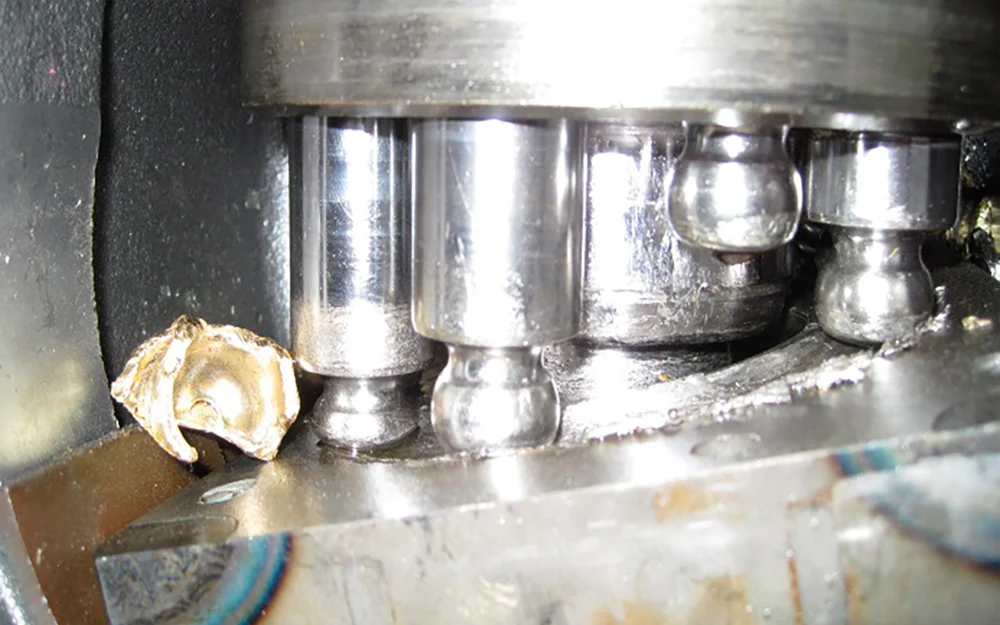
The air in hydraulic oil may be dissolved, free (bubbles) or appear as surface foam. It is crucial not to exceed the saturation limit of the oil: Free air causes cavitation in pumps and throttling pipelines, micro-jets, material tears and even holes in the housings or the escape of high-pressure jets of fluid.
Subjecting air bubbles to rapid pressure increases may cause micro-explosions (diesel effect), which leads to soot formation, dark-coloured oil and additive degradation.
Known indicators from practice: Loud noises from the pump after shutdown, hammer-impact sounds (loud bangs) resulting from decompression, whiplashing hydraulic hose lines and brief system overloads.
2.4 Contamination and abrasive wear
Hard particles (dust, abrasion products) are among the main causes of wear, recognisable by reduced consumer equipment speed, increased noise, elevated operating temperature, sudden pressure drops or leaks.
Among the causes that can be laid at the feet of the operator are refilling (topping up) with unfiltered hydraulic oil, unclean maintenance practices, unsuitable or contaminated replacement parts and excessive temperatures resulting in the oil having less than the minimum permitted viscosity.
2.5 Ageing and reuse of hydraulic hose lines
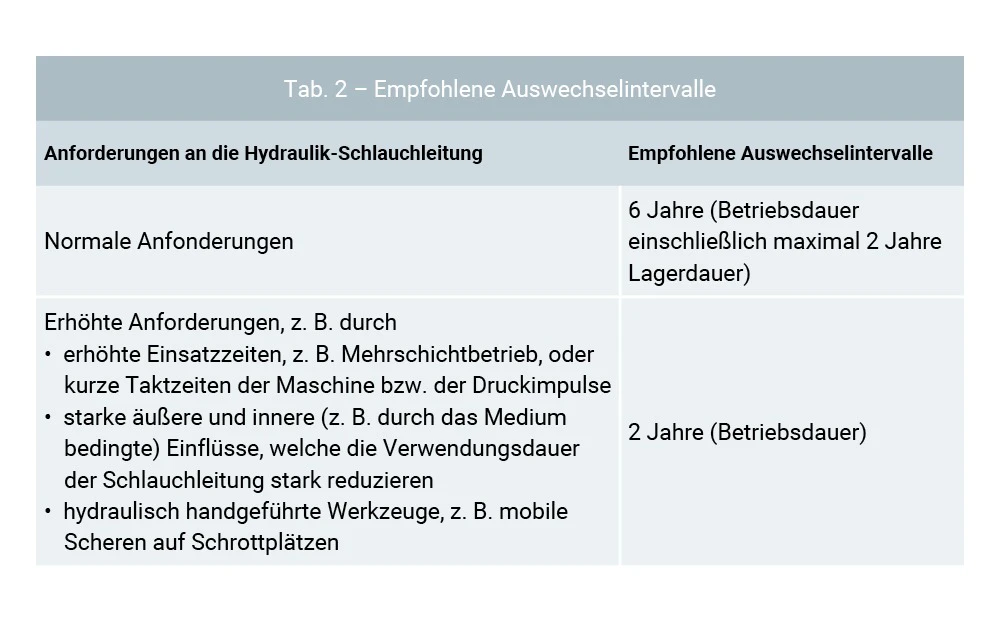
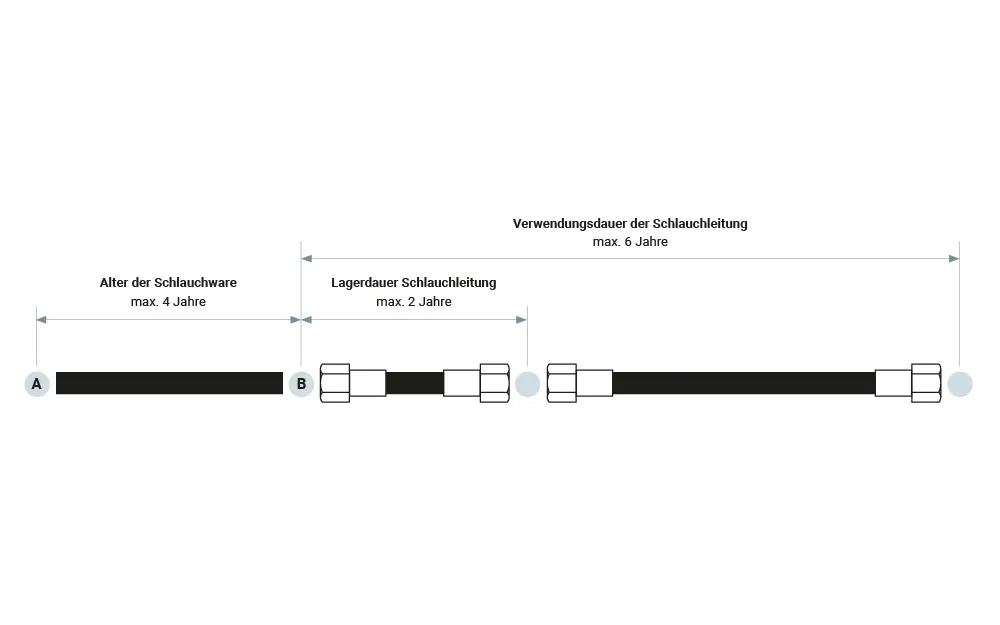
Hydraulic hose lines are wear parts with a limited service life and are not everlasting components. Recommended replacement times:
- Standard duty: up to 6 years including max. 2 years in storage.
- Higher duty: max. 2 years in service.
Departures from these recommendations are permissible only with definitive values from testing and experience as well as a risk assessment. - Important: Repairs to hydraulic hose lines that have previously carried hydraulic fluids are not permitted; as is the manufacture of new hydraulic fittings from used pieces of hydraulic hose. The grounds for this are based on the changed elastomer properties (shrinkage, swelling) caused by the hydraulic fluid used. Residual oil remaining on the hydraulic hose line inner layer cannot be avoided. This forms a film between the hydraulic hose line and the external surface of the hydraulic hose line nipple. Swelling or shrinkage of the elastomer presents the risk of the crimped connection not being strong enough – the consequence: leaks or the hydraulic hose even being torn out of its fitting.
3. Preventative measures – engineering and organisational
3.1 Design and technical measures
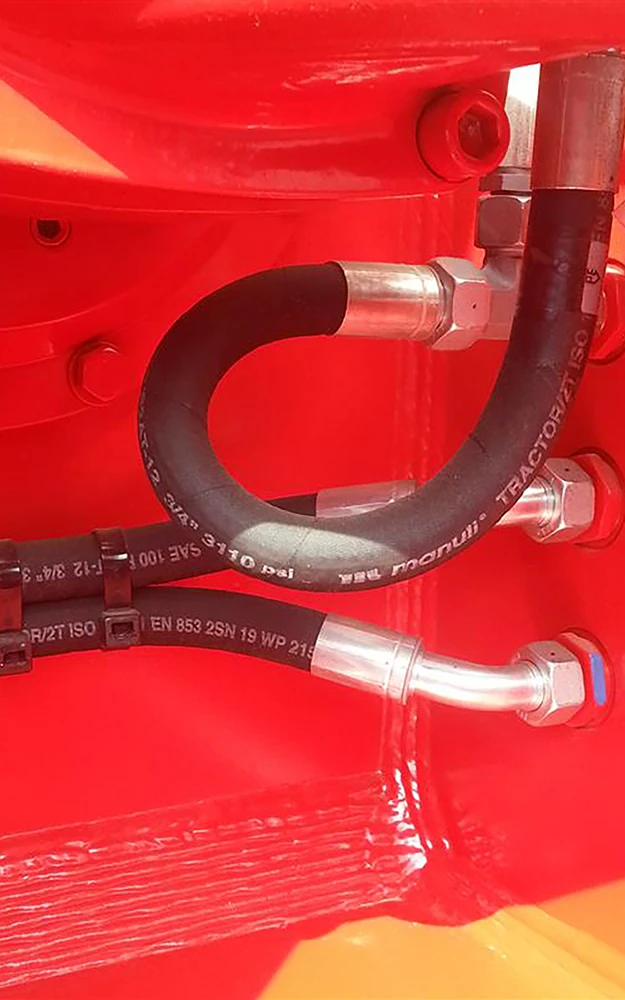
- Pipeline routing and installation
- Observe minimum bending radii; avoid tensile/compressive strains, torsion and abrasion (rubbing against other components); keep away from sources of heat. Use hydraulic hose brackets only on straight lengths, do not use hydraulic pipe clamps to firmly hold the hose.
- Component design and valve technology
- Design cross sections, valves and couplings for the maximum volumetric flow and impulse pressures; avoid fast-switching processes (use soft-switching or proportional directional valves)
- Suction conditions and tank design
- Underpressure in the suction line < 0.4 bar; the suction line must be free of leaks and without bends, inlet with 45° chamfer; tank volume 2.5-3x pump volumetric flow, return removed from the suction line.
- Filtration concept and oil care
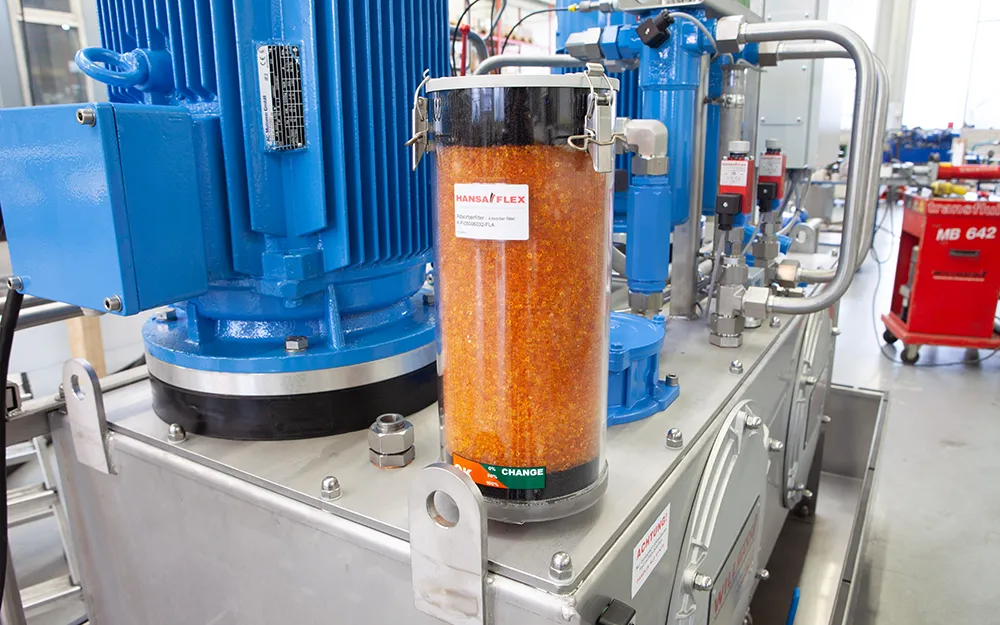
Suitable pressure, return and tank ventilation/breather filters with condition monitoring; bypass filter operating only with integrated safety-relevant features (emergency stop); partial flow filter system installed if necessary, fresh oil added only with fine-mesh filtration, have regular oil analyses performed in an independent oil laboratory.
5. Protective hoses and hose restraints
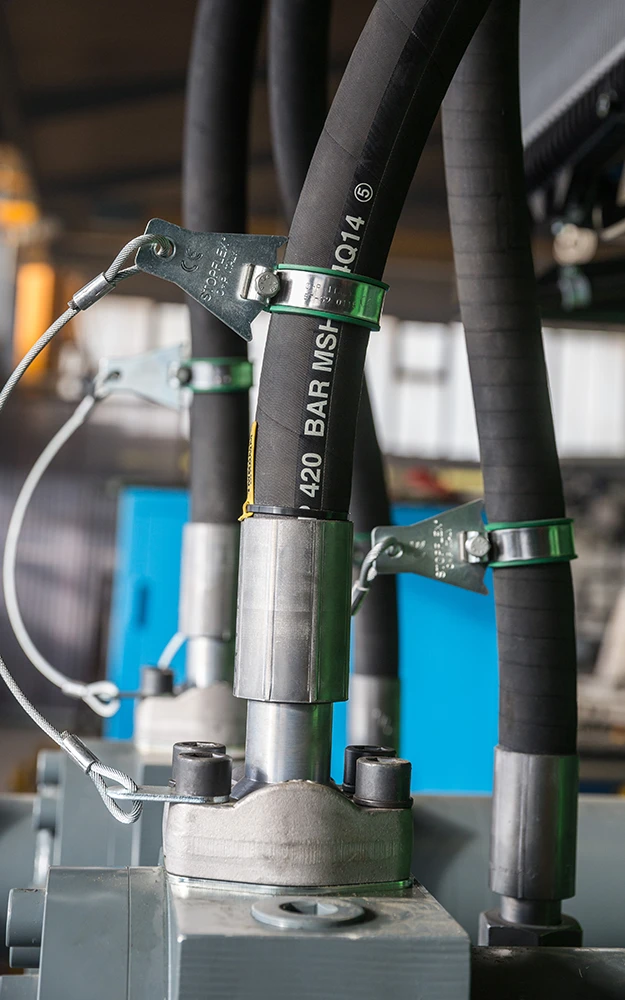
- Install protective braiding and hose restraints if there is the risk of whiplash or escaping jets of oil; protective hoses must completely cover the ferrule and the hose and must not be crimped to the fitting, while the internal diameter should be ~ 30 % (minimum +15 mm) greater than the external diameter of the hydraulic hose; fastening in place is done normally on one side only.
- Select hose restraint systems appropriate to the max. permissible operating pressure, hydraulic hose type, fitting and nominal diameter; installation must be strictly in accordance with the manufacturer’s instructions/operating manual.
3.2 Maintenance, inspection and testing intervals
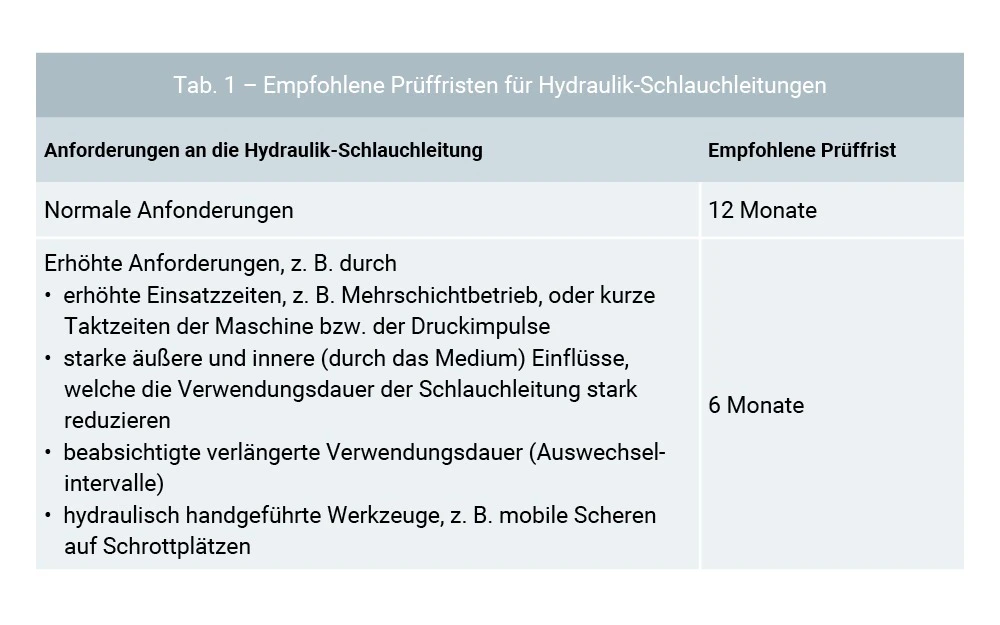
- Initial inspectionand recurring inspections must be performed by authorised persons qualified to conduct inspections and the records kept; typical intervals: 12 months (standard duty) or 6 months (higher duty) – adjusted to suit the risks.
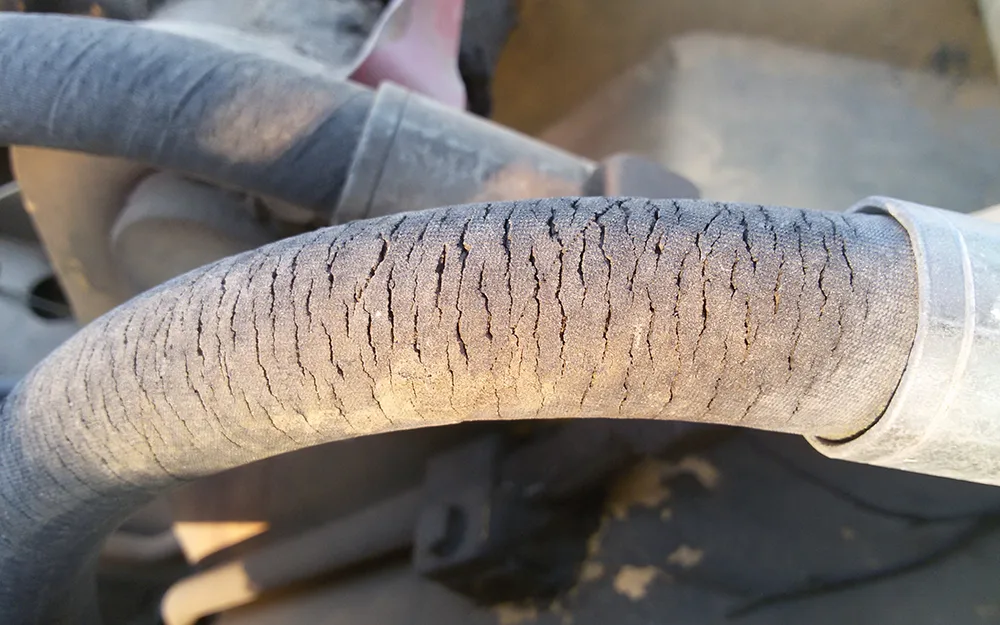
- Replacement criteria for hydraulic hose lines (including DIN 20066, section 14.2, DGUV Rule 113-020): Outer layer damaged down to the reinforcement, cracking/brittleness, changes in shape, leaks, deformed fittings, connections slipping apart, corrosion, installation errors, storage/in service periods exceeded.
- Operational monitoring acts as an early warning system: fluid level, leakage check, changes in cylinder timings/rotational speed, filter service life, oil analyses.
- Hydraulic accumulators are considered to be pressure systems. These are governed by the German Industrial Health and Safety Act (BetrSichV) §15/16 Testing regulations for systems requiring monitoring. Section 4 of Appendix 2 (to §15/16) gives specific information about the inspection and testing regulations for pressure systems/hydraulic accumulators.
3.3 Cleanliness and media management
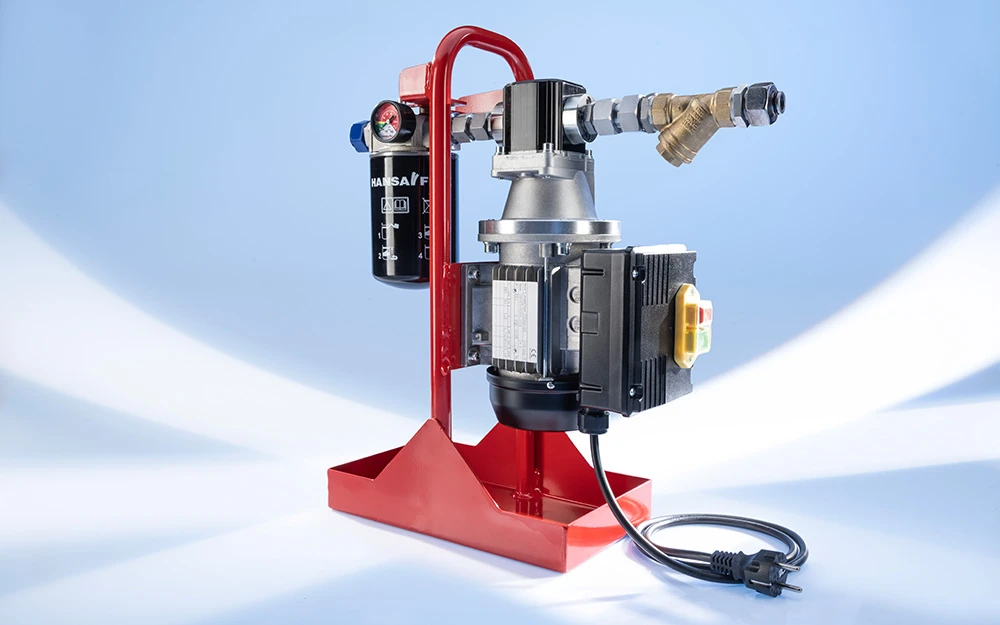
- Use only filtered oil – for both refilling (topping up) and for oil changes; avoid switching to an alternative product without first obtaining the manufacturer’s approval; avoid mixtures of oil, because mutually incompatible additives can considerably reduce the protection against wear. Miscibility does not necessarily mean compatibility!
- All components of replacement parts, filling equipment and tools must be clean; take great care to ensure the cleanliness of servicing and repair work.
3.4 What to do about decompression and cavitation effects
- Use soft-switching directional control valves and switching time delays; fit damping devices to pressure accumulators; use seated valves with throttles in parallel for controlled release of decompression volumes.
- Observe the pump manufacturer’s regulations for bringing into use (filling/bleeding/minimum viscosity); if noise develops, briefly run the system in a depressurised state, otherwise switch off and check for suction leaks.
4. Responsibilities, qualification and organisation
The safe operation of hydraulic systems is a management duty:
- Employers/operators prepare risk assessments, define inspection intervals and train employees. Breaches of this duty are considered as gross negligence and can lead to personal liability.
- Inspections and approvals are performed by an authorised person qualified to conduct inspections in accordance with TRBS 1203 designated by the employer; the inspection results are recorded in writing and kept for retrieval.
- In the case of recurring defects, there is a duty to perform root cause analyses, modify replacement and inspection intervals as well as to retrofit equipment (e.g. additional shielding, modified switching logic elements).

Conclusion
The protection of health and safety in hydraulics is achieved not through individual measures but through an integrated system of design to the applicable standards, quality-assured installation, intelligent monitoring, clean maintenance, employees trained in hydraulics, and systematic organisation. If symptoms (temperature increases, noises, drop-off in performance, leaks) are recognised at an early stage, the causes (pressure peaks, air, contamination, incorrectly sized components) analytically rectified and protective systems (protective hoses, hose restraints, filtration) correctly introduced, then the risks for personnel, machines and the environment are drastically reduced, machine operating times extended and profits maximised.
-

Ulrich Hielscher
Managing Director Internationale Hydraulik Akademie GmbH