Austria
 Belgium
 BosniaAndHerzegovina
 Bulgaria
 Croatia
 Czechia
 Estonia
 France
 Germany
 Hungary
 Ireland
 Italy
Italy
 Latvia
 Lithuania
 Luxembourg
 Netherlands
 Poland
 Portugal
 Romania
 Serbia
 Slovakia
 Slovenia
 Spain
Spain
 Swiss
Swiss
 Ukraine
 United Kingdom
 Australia
 China
China
 Georgia
 India
India
 Kazakhstan
 Singapore
 Thailand
 Turkey
 الإمارات العربيّة المتّحدة
 South Africa
 Canada
 Mexico
 USA
USA
 Brazil
 Chile
Chile
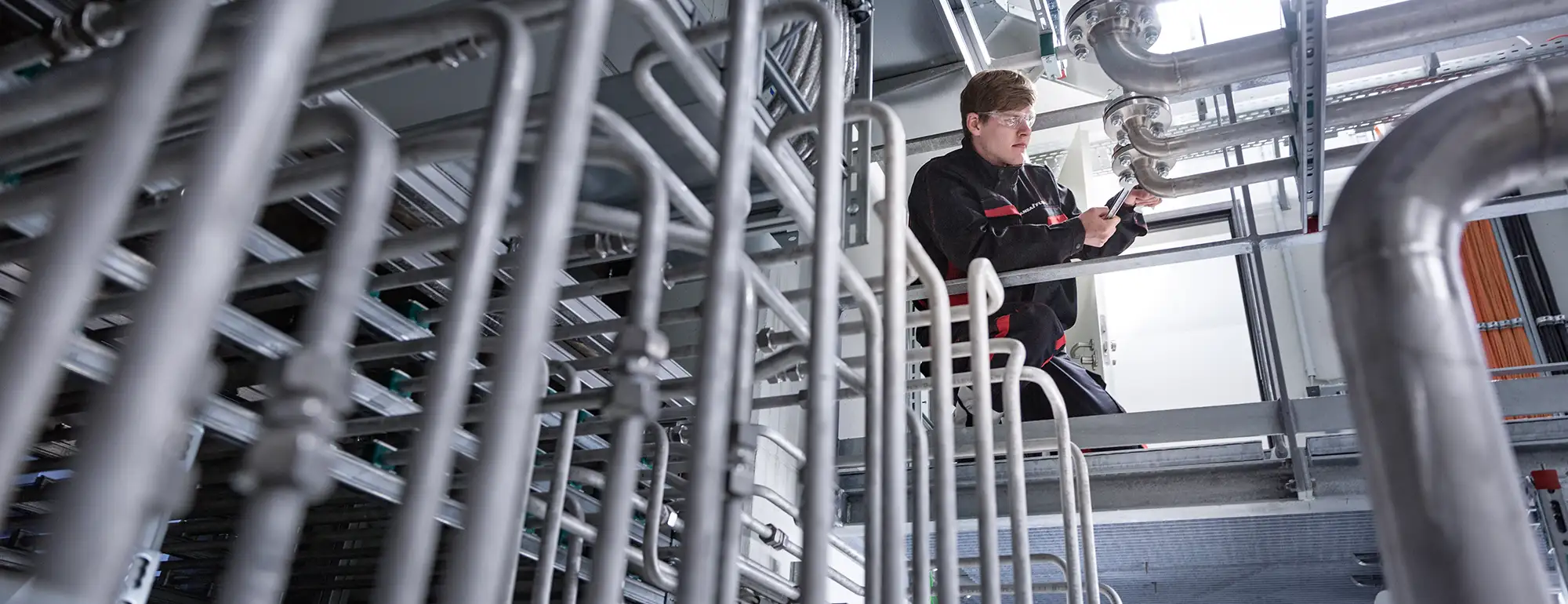
Hydraulic pipelines are extremely important in hydraulic systems because of their standardised dimensions and the many different types of reliable connection techniques available. Their space-saving installation, i.e. hydraulic pipes can be bent to much smaller radii than can be achieved with hydraulic hose, is not their only advantage – hydraulic pipelines undergo no natural ageing – unlike hydraulic hose lines, whether they are made of elastomer or thermoplastic. A hydraulic pipeline bent in compliance with the requirements also has advantages in terms of flow characteristics compared to a hydraulic hose line.
Correct design is essential for the safe operation and functioning of hydraulic pipelines. The designer and the manufacturer of hydraulic pipelines must therefore look in the first instance at some important parameters and take appropriate account of them. These parameters include the volumetric flow, the medium used and the maximum anticipated working pressure, which play a very significant role. When we look more closely at the maximum working pressure of a hydraulic pipe in a manufacturer’s catalogue, we can see that two maximum permissible working pressures are normally given. Load Case I – for predominantly static loads up to 120 °C – has higher pressure values than those of Load Case III – for dynamic/pulsating loads up to 120 °C.
Load Case III is normally used for hydraulic applications. It should be noted that the stated pressure values relate to the maximum permissible working pressure for STRAIGHT PIPE. These pressure values are calculated on the basis of standards, e.g. DIN 2413 or DIN EN 13480. Bending a hydraulic pipeline, whether by hand or on a CNC-controlled mandrel bending machine, changes the pipe wall thicknesses in the bend. On the outside of the bend, the pipe wall thickness reduces. Consequently, the pressure strength of the hydraulic pipe is reduced after the bending process. In practice, this is often overlooked, and it leads to failure of the hydraulic pipeline.
For pipeline system designers, there is what is commonly referred to as an alternative method for determining the necessary pipe wall thickness after bending, by which the correct wall thickness for the unbent pipe can be obtained pragmatically, quickly and precisely, without complicated calculations. This alternative method is fully described in DIN EN 13480.
However, a necessary first step is to calculate the required hydraulic pipe internal diameter from the volumetric flow in l/min, working pressure and the maximum recommended flow velocities in m/s for the pressure, return and suction lines.
Guidance and formulas for this can be found in the relevant literature. For example, a maximum flow velocity of 6 m/s is recommended for a pressure line, 3 m/s for a return line and 1 m/s for a suction line.
Using a working pressure of 220 bar, a volumetric flow of 40 l/m to calculate the internal diameter of a pressure line results in a required internal diameter of 12 mm.
Now the user needs to know the desired bending radius. With many hydraulic pipe types, bending radii of 1.5 – 3x diameter of the hydraulic pipe are possible and in widespread use. For a standard bending radius of 2x diameter (2xD), the required pipe wall thickness for the straight hydraulic pipe is multiplied by a factor of 1.2. Thus it may be that, instead of a hydraulic pipe with dimensions of 15x1.5 mm (internal diameter 12 mm), a hydraulic pipe with dimensions 16x2 mm (internal diameter 12 mm) is required in order to ensure it has the desired pressure strength after bending. It should be mentioned here that a hydraulic pipe with a calculated wall thickness of 1.8 mm is not a standard product. The internal diameter should not be reduced by the increase in wall thickness. Otherwise, it would result in a much greater flow velocity, which would also raise the temperature of the medium and the hydraulic pipe.
Another small point to be made on the topic of temperature: bending hydraulic pipes has the advantage not only of saving space but also of allowing them to be designed and installed so as to optimise their flow performance. It also helps to accommodate or relieve longitudinal expansion forces, which inevitably arise from higher temperatures. A hydraulic pipeline made from steel initially 1000 mm long can change in length by about 0.70 mm in response to a temperature increase or decrease of 60 °C. In the case of stainless steel, the same temperature change of 60 °C would cause a change in length of about 1.0 mm.
In some situations, the choice of material presents the manufacturer of hydraulic pipelines with further technical challenges. A hydraulic pipe with higher material properties or a better grade of material may well have been selected to ensure the necessary pressure resistance. However, under certain circumstances, this might mean the hydraulic pipe cannot be bent to the desired radius.
Apropos bending: every bending process causes the pipe to become less round. A lot depends on the bending technique used. The out-of-roundness caused by bending should not exceed a maximum of 7-10 %. This can be achieved by using suitable bending techniques and is completely acceptable from an engineering point of view. The flow and pressure losses that occur in the bend are normally small enough to be ignored.
Nowadays, renowned manufacturers of hydraulic pipes offer various engineering apps for this task. In just a few clicks, they can arrive at a suitable pipe and surface finish solution. It is essential, however, to enter the technical requirements, some of which have been discussed above. The producers of hydraulic pipes offer comprehensive technical advice, e.g. about special solutions and/or simulations.
-

Mathias Müller
Internationale Hydraulikakademie (IHA)